
Singer 500 Manual: A Comprehensive Guide
This guide provides detailed PDF manual access for the Singer 500 and 500A models, offering instruction and troubleshooting for classic sewing machine operation․
The Singer 500, and its variant the 500A, represents a cornerstone of domestic sewing machine history․ Produced with robust construction, these machines quickly gained popularity for their reliability and ease of use․ Many were acquired affordably, even in locations like Mexico City, as noted by users seeking readily available PDF instruction manuals․
This machine is a testament to Singer’s enduring design principles․ Finding a replacement manual is often necessary, as original copies are frequently misplaced․ Fortunately, numerous resources now offer free PDF downloads, ensuring continued operation and enjoyment for owners․ Superior Sewing Machine & Supply LLC also provides access to historical documentation․
Understanding the Singer 500 Models (500 & 500A)
While often discussed interchangeably, the Singer 500 and 500A possess subtle differences․ Both models share the core mechanics and robust build quality that define the series, making readily available PDF manuals broadly applicable․ However, the 500A often features minor cosmetic variations and potentially slight adjustments to internal components․
Regardless of the specific model, accessing a comprehensive instruction manual is crucial for optimal performance․ Users frequently search for free PDF versions online, recognizing the value of original documentation․ Resources like those offered by Superior Sewing Machine & Supply LLC can aid in identifying specific model nuances․

Key Features and Specifications
Singer 500 machines boast durable construction and versatile stitching capabilities, detailed within available instruction manuals and PDF resources for classic sewing․
Machine Dimensions and Weight
Determining the precise dimensions and weight of the Singer 500 can vary slightly between the original 500 model and the later 500A version․ However, generally, these machines are considered compact and relatively lightweight for their robust build․
Typical dimensions fall around 15 inches in length, 8 inches in width, and 11 inches in height․ The weight usually ranges between 15 to 20 pounds, making it manageable for transport and storage․
Consulting a dedicated Singer 500 manual or a PDF version will provide the most accurate specifications for your specific machine, ensuring correct accessory selection and workspace planning․ These details are crucial for optimal use;
Motor Specifications
The Singer 500 sewing machine typically features a robust, yet relatively simple, electric motor designed for reliable performance․ While specific wattage details aren’t always prominently featured in readily available manuals, it generally operates on standard household current․
The motor is designed to provide sufficient power for handling a variety of fabrics, from lightweight cottons to heavier denim․ It’s a direct-drive system, meaning the motor is directly connected to the machine’s handwheel, offering consistent speed and control․
Referencing a detailed Singer 500 or 500A manual, particularly a PDF version, can offer more precise motor specifications if needed for repair or maintenance․
Stitch Types Available
The Singer 500, a classic machine, primarily focuses on straight stitching, making it ideal for basic sewing tasks․ While not boasting the diverse stitch options of modern machines, it excels in creating durable and consistent seams;
The Singer 500A model offers a slight expansion, often including a zigzag stitch capability through the use of optional attachments․ Accessing a comprehensive PDF manual will detail these attachment options and their corresponding stitch patterns․
Users can achieve varied effects by adjusting stitch length and width, though the core functionality remains centered around reliable straight-line sewing․ Refer to your instruction manual for optimal settings․
Accessing the Manual
Free PDF manuals are readily available online for the Singer 500, offering convenient access to instruction and support resources․
Free PDF Manual Download Locations
Numerous online archives offer free PDF manuals for the Singer 500 and 500A sewing machines․ Websites like Superior Sewing Machine & Supply LLC (www․supsew․com) host downloadable versions, providing a valuable resource for owners․ Several third-party manual archives also compile and share these documents, ensuring accessibility․
A quick internet search for “Singer 500 manual PDF” yields numerous results, including direct download links and forum discussions where users share files․ Remember to exercise caution when downloading from unfamiliar sources and always scan for viruses․ These resources provide convenient access to instruction, troubleshooting guides, and detailed diagrams for your vintage Singer machine․
Official Singer Website Resources
While the Singer 500 is a vintage model, the official Singer website may still offer limited support or archived resources․ Exploring the Singer website’s support section and searching for “Singer 500 manual” or “Singer 500A manual” is a good starting point․
Although direct PDF downloads for older models aren’t always guaranteed, the site may provide links to helpful FAQs, troubleshooting tips, or contact information for customer service․ Additionally, Singer’s online community forums can be a valuable source of information, where other users may have shared links or advice regarding the instruction manual for your machine․
Third-Party Manual Archives
Numerous websites specialize in archiving vintage sewing machine manuals, offering free PDF downloads for models like the Singer 500 and 500A․ These archives often contain scanned copies of original instruction manuals, providing detailed guidance on operation, maintenance, and troubleshooting․
Websites like Superior Sewing Machine & Supply LLC (supsew․com) are excellent resources․ Searching online using terms like “Singer 500 manual PDF” will reveal several options․ Be cautious when downloading from unfamiliar sites and ensure your antivirus software is up-to-date to protect against potential malware․

Setting Up Your Singer 500
Proper setup involves carefully threading the machine, correctly winding the bobbin, and securely installing the needle for optimal sewing performance․
Threading the Machine
Successfully threading your Singer 500 is crucial for consistent stitch formation․ Begin by ensuring the presser foot is raised, allowing for smooth thread passage․ Guide the thread from the spool pin, through the first thread guide, and then down to the tension discs – confirm the thread seats firmly between them․
Next, lead the thread through the take-up lever, ensuring it’s in its highest position, and then down to the needle bar thread guide․ Finally, thread the needle from front to back․ Incorrect threading can cause skipped stitches or tension issues, so double-check each step against the instruction manual or a reliable PDF guide․
Winding the Bobbin
Proper bobbin winding is essential for the Singer 500’s operation․ Place the spool of thread on the spool pin and guide the thread to the bobbin winder tension disc․ Then, engage the bobbin winder by sliding it to the right․
Position an empty bobbin onto the bobbin winder spindle and begin winding by pressing the foot pedal gently․ Allow the bobbin to fill evenly, stopping before it overflows․ Disengage the winder and secure the thread end․ Refer to your PDF manual for specific winding techniques, as incorrect winding can lead to inconsistent stitching and tension problems․
Installing the Needle
Correct needle installation is crucial for smooth sewing with your Singer 500․ Ensure the machine is turned off before proceeding․ Raise the needle to its highest position using the handwheel․ Loosen the needle clamp screw and insert a new needle, with the flat side facing the back of the machine․
Tighten the needle clamp screw securely, but avoid over-tightening․ Always use the correct needle type and size for your fabric․ Consult your PDF manual for guidance․ A properly installed needle prevents breakage and ensures consistent stitch formation․

Basic Operation
Learn to start, stop, adjust stitch length and width, and utilize reverse stitching on your Singer 500, as detailed in the instruction manual․
Starting and Stopping the Machine
To begin sewing with your Singer 500, ensure the machine is properly threaded and the presser foot is down․ Gently depress the foot pedal to initiate stitching; the speed is directly proportional to pedal pressure․
Stopping the machine is equally straightforward․ Simply release the foot pedal․ The needle will come to a complete halt, and the machine will cease operation․ Always ensure the machine has fully stopped before attempting to adjust fabric or change direction․
Refer to your instruction manual for specific guidance on initial setup and safety precautions․ Consistent practice will quickly build confidence and proficiency in controlling the machine’s speed and stopping mechanisms․
Stitch Length and Width Adjustment
Adjusting stitch length on your Singer 500 is crucial for various fabric types and sewing applications․ Locate the stitch length dial, typically marked with numerical values or length indicators․ Rotating this dial alters the distance between each stitch․
Stitch width, controlling the zigzag pattern’s breadth, is adjusted via a separate dial․ Wider settings create broader zigzag stitches, ideal for decorative work or preventing fabric fraying․ Consult your manual for specific settings recommended for different fabrics․

Experimentation is key to mastering these adjustments, ensuring optimal stitch quality and project outcomes․
Reverse Stitching
Reverse stitching, essential for securing seams at the beginning and end, is easily achieved on the Singer 500․ Typically, a lever or button located near the handwheel activates this function․ Press and hold this lever while gently pressing the foot pedal to sew in reverse․
Release the lever to return to forward stitching; Use short reverse stitches – around 6-8 stitches – for secure seam endings․ Avoid prolonged reverse sewing, as it can damage the machine’s mechanism․
Refer to your manual for the precise location of the reverse lever on your specific Singer 500 model․

Advanced Techniques
Explore utilizing various attachments, mastering troubleshooting for common issues, and implementing consistent maintenance routines to maximize your Singer 500’s potential․
Using Attachments and Presser Feet
The Singer 500’s versatility expands significantly with the correct attachments and presser feet․ Different feet cater to specialized tasks, like zippers, buttonholes, or decorative stitching․ Explore options for gathering, quilting, and even blind hemming․
Proper installation is crucial for optimal performance; ensure the foot clicks securely into place․ Refer to your manual for specific attachment compatibility․ Experimenting with these tools unlocks creative possibilities, allowing you to tackle a wider range of sewing projects with precision and ease․ Understanding each attachment’s function will elevate your sewing experience․
Troubleshooting Common Issues
Encountering problems with your Singer 500 is common, but often easily resolved․ Thread jamming frequently stems from improper threading or lint buildup – clean the machine thoroughly․ Needle breaking can indicate incorrect needle size for the fabric or a bent needle․
Motor issues might require professional repair, but check the power cord and foot pedal first․ Consult the manual for diagrams and specific solutions․ Regular maintenance, like cleaning and oiling, prevents many issues․ Don’t force anything; gentle troubleshooting is key to preserving your machine․
Maintaining Your Singer 500
Consistent care extends the life of your Singer 500․ Regular cleaning removes lint and debris, preventing jams and ensuring smooth operation․ Oiling and lubrication are crucial; apply oil to designated points as outlined in the manual․
Long-term storage requires thorough cleaning, oiling, and covering the machine to protect it from dust․ Avoid storing in damp environments․ Periodic use, even during storage, helps keep internal parts functioning․ Proper maintenance guarantees years of reliable sewing performance․

Troubleshooting
Common issues like needle breakage, thread jamming, and motor problems are addressed with solutions found within the Singer 500 manual and online resources․
Needle Breaking Problems
Frequent needle breakage with your Singer 500 often indicates a setup or operational issue․ First, ensure you’re using the correct needle type and size for your fabric weight – a fine needle on heavy material will snap․
Incorrect threading is a primary culprit; re-thread the machine carefully, following the manual’s diagram․ A poorly wound bobbin, or incorrect bobbin insertion, can also cause tension imbalances leading to breakage․
Check the needle plate; a damaged or misaligned plate can deflect the needle․ Finally, avoid forcing the fabric – let the machine feed it smoothly․ Refer to the Singer 500 manual for detailed illustrations and troubleshooting steps․
Thread Jamming Solutions
Thread jamming on a Singer 500 is a common issue, often stemming from improper threading․ Carefully re-thread the upper thread and bobbin, ensuring the thread is seated correctly in all tension discs and guides․
Lint and debris accumulation within the machine is another frequent cause; thoroughly clean the bobbin area, feed dogs, and thread paths as detailed in your manual․
Incorrect tension settings can also lead to jams․ Experiment with slight adjustments to both upper and bobbin tension․ If the problem persists, consult the Singer 500 manual’s troubleshooting section for specific guidance and diagrams․
Motor Issues and Repairs
Motor problems with the Singer 500 often involve a lack of power or unusual noises․ First, ensure the power cord is securely connected and the foot controller is functioning correctly․ Check for any obstructions hindering the motor’s movement․
If the motor hums but doesn’t turn, the capacitor might be faulty – a repair best left to a qualified technician․ The Singer 500 manual doesn’t detail extensive motor repairs, emphasizing professional servicing for complex issues․
Attempting DIY repairs without proper knowledge can be dangerous; prioritize safety and consult a sewing machine repair specialist for motor troubleshooting and repairs․

Maintenance and Care
Regular cleaning, proper oiling, and careful lubrication are vital for the Singer 500’s longevity, ensuring smooth operation and preventing mechanical issues․
Cleaning the Machine
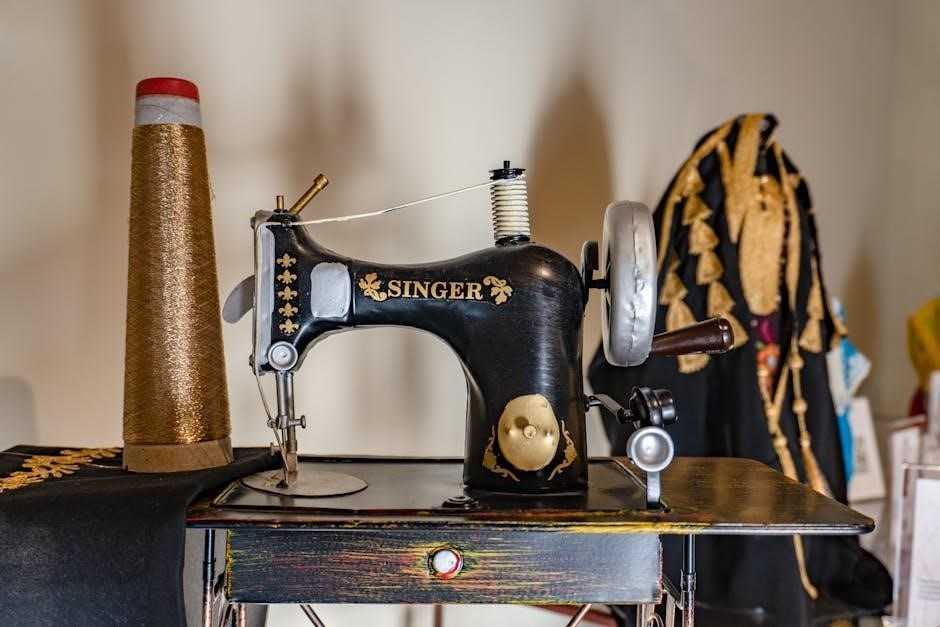
Consistent cleaning is paramount for maintaining your Singer 500․ Begin by disconnecting the power source․ Use a soft brush to remove lint and dust from all accessible areas, including the bobbin case and feed dogs․ A small vacuum cleaner with a brush attachment can also be helpful․
For stubborn grime, lightly dampen a cloth with sewing machine oil or a specialized cleaning solution – avoid harsh chemicals! Gently wipe down the exterior surfaces and internal components․ Pay close attention to areas where oil accumulates․ Remember to clean around the needle clamp and under the presser foot․
Regular cleaning prevents build-up that can cause jams and affect stitch quality, extending the life of your machine․
Oiling and Lubrication
Proper lubrication ensures smooth operation of your Singer 500․ Disconnect the power before oiling․ Use only sewing machine oil – never household oil! Apply a small drop to all moving parts, including the bobbin winder, shuttle hook, and presser bar linkages․
Focus on points indicated in your manual, typically accessible through oil holes․ Rotate the handwheel slowly while oiling to distribute it evenly․ Avoid over-oiling, as excess oil attracts dust and can cause problems․
Regular oiling, combined with cleaning, minimizes friction, prevents wear, and maintains optimal performance․ Wipe away any excess oil with a clean cloth after lubrication․
Long-Term Storage
Preparing your Singer 500 for extended storage requires careful steps․ Thoroughly clean the machine, removing all lint and dust․ Lightly oil all moving parts, as detailed in the maintenance section of your manual, to prevent rust․
Cover the machine with a dust cover or cloth to protect it from debris․ Store it in a dry, climate-controlled environment, avoiding attics or basements with fluctuating temperatures․
Loosen the presser foot tension slightly to relieve stress on the springs․ Before reconnecting for use, re-oil and test the machine to ensure smooth operation․